Author: Kristan Reynolds
Date: February 27, 2026
Our researchers and students spend countless hours conducting fieldwork, writing lab reports, and caring for the marine life in our lab, giving a window into their deep passion for the ocean and its critters. This Valentine’s Day, we asked them to put that passion into words. The result? A collection of love letters to the ocean’s most captivating creatures, and a reminder that science begins with curiosity but is sustained by love.
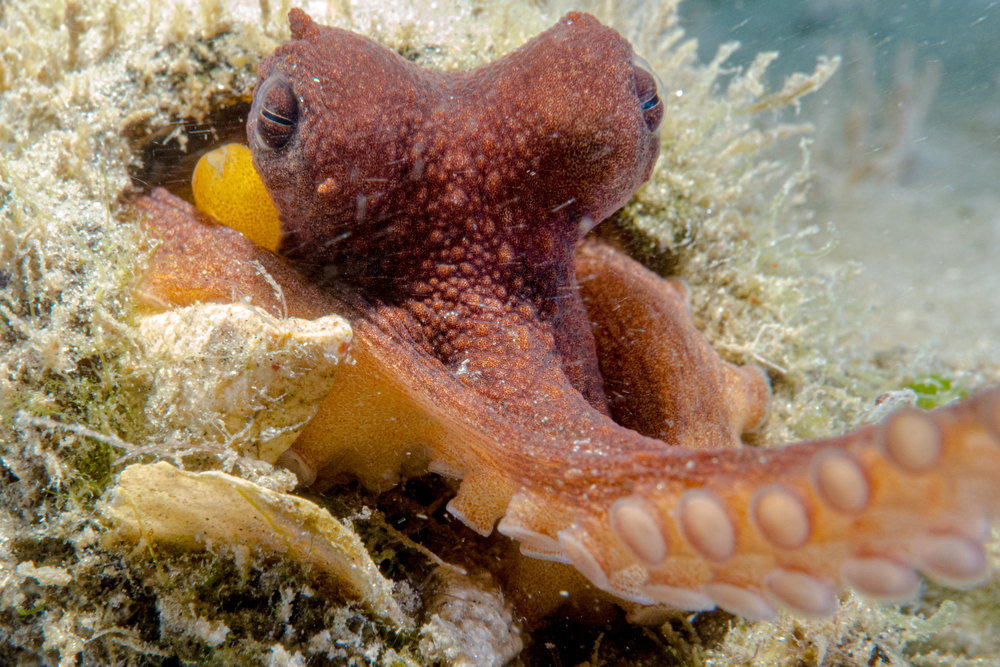
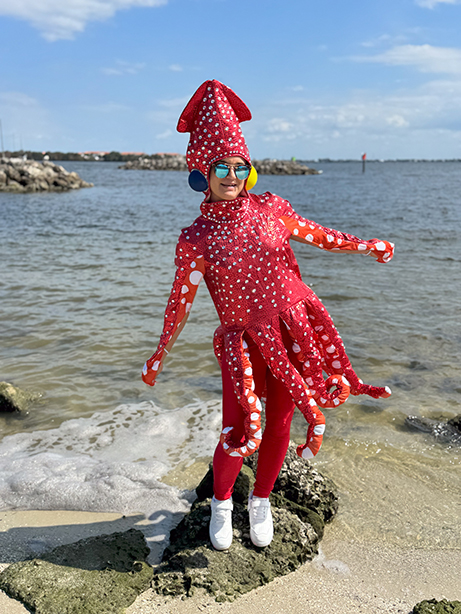
Dr. Chelsea Bennice is a postdoctoral research fellow at Florida Atlantic University’s Marine Lab studying octopus behavior and biology. To many, she’s better known as “Octo-girl.” She is often spotted out in public rocking octopus hats, and even her strawberry squid costume.
Dr. Bennice’s research examines how octopuses interact with their environment — whether it be food or habitat. Her discoveries help scientists understand how octopuses play major roles as predators and prey in the food web. These roles are characteristic of healthy ocean ecosystems.
She also analyzes octopus’ skin microbiomes and blood chemistry to establish a baseline for determining the status of a healthy octopus.
Dr. Bennice explains that establishing those baselines are “important because the oceans will change over time, for example, by pollution. Octopuses may be negatively affected. We must understand what is the current ‘normal’ to see if these animals are adapting to changing environments.”
Dr. Bennice loves being able to scuba dive and observe octopuses in their natural habitat. When her lab and computer work get difficult, the anticipation of upcoming fieldwork keeps her motivated.
“There are many questions with the response ‘We don’t know.’ about octopus research,” said Dr. Bennice. “These knowledge gaps motivate and excite me to take on challenging questions that more often than not, I can answer through field and/or laboratory study.”
Her fascination with octopuses stems from their large behavioral repertoire. From skin color and texture changes to nearly limitless arm movements, octopuses are quick to adapt to all situations under the sea.
“A few of my favorite behaviors are known as motion camouflage — when the animal moves from point A to point B, while remaining undetected by any visual predators,” said Dr. Bennice. “The octopus can look like floating seaweed, mimic a flatfish, or use its ‘moving rock’ trick.”
If Dr. Bennice had to pick three words to describe octopuses, they would be: weird, wild, and wonderful.
Following in Dr. Bennice's footsteps, one of her students is now turning her attention to the Atlantic longarm octopus.
Miranda Manross is a Master’s of Science student studying under the direction of Dr. Bennice. Her research focuses on Atlantic longarm octopus’ behavior, including how they engineer their environment and why they choose certain sediments to build burrows.
One thing that Miranda loves about her research is its interdisciplinary nature — combining environment, behavior, and “a bit of mystery.”
“Watching an Atlantic longarm octopus build a burrow in real time is like seeing problem solving and instinct come together,” said Miranda. “It's just fun figuring out small little details that others didn’t or wouldn't notice.”
While her love for the Atlantic longarm partially stems from their adaptability, Miranda also appreciates their odd anatomy — referring to them as “underwater spaghetti monsters.”
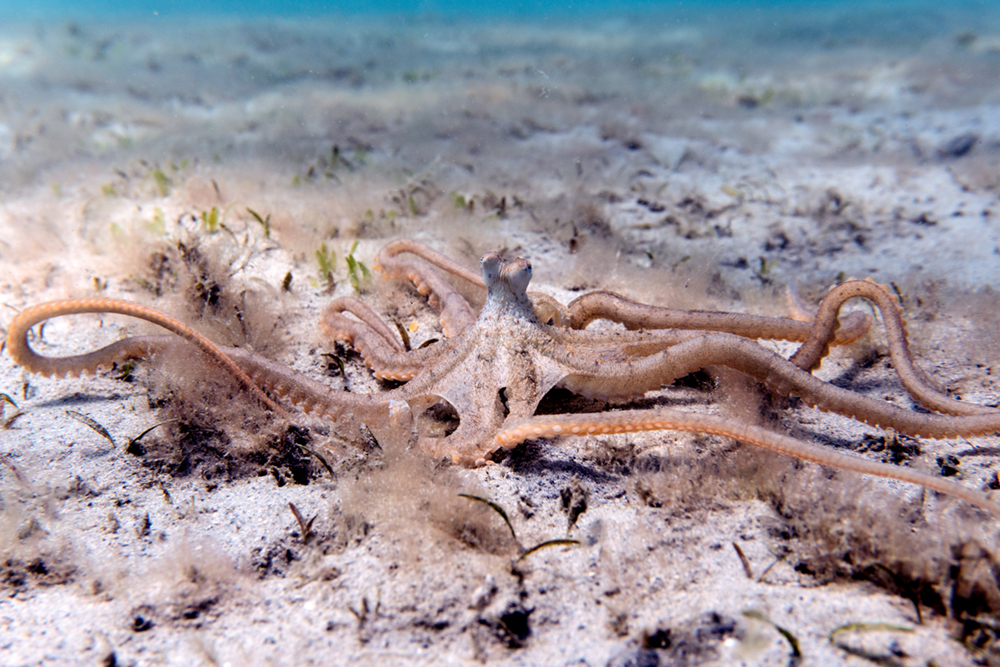
“Their body-to-arm length ratio is incredibly funky, so their body looks tiny compared to their really, really long arms," she said. “They totally live up to their name.”
Growing up with the dream of becoming a marine biologist — and scuba diving since the age of eight — Miranda often looks back to her childhood for motivation. Today, she feels like a “real-life mermaid” as she spends much of her time underwater. She also takes pride in knowing her data contribute to a larger story about this unique animal and its behavioral repertoire.
If Miranda had to pick three words to describe Atlantic longarm octopuses, they would be: strategic, sneaky, and spaghetti!
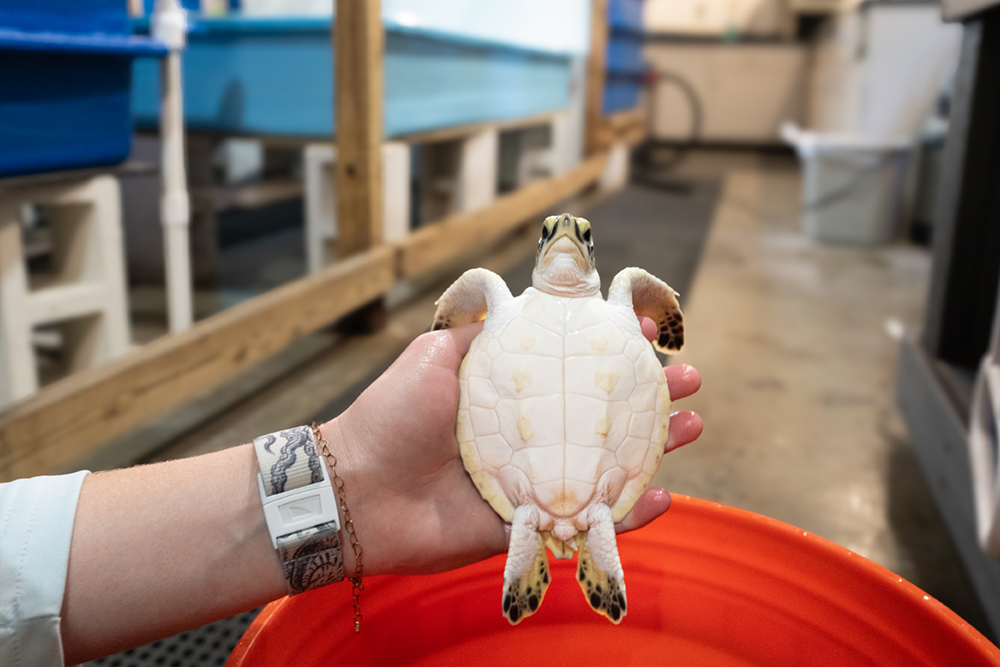
Chamarea Dera is a Directed Independent Research (DIR) student studying with Dr. Jeanette Wyneken, and a former Glenn W.& Cornelia T. Bailey Marine SEA (Science, Education, & Arts) Scholar at the Florida Atlantic Marine Lab.
Now in her fourth semester working with loggerhead and green sea turtle hatchlings, Chamarea has learned extensively about these turtles and developed an even deeper appreciation of them. She is extremely grateful for the rare opportunity to work with and care for sea turtle hatchlings.
Although she loves both species she works with, Chamarea has grown particularly fond of loggerheads.
“Their shell — it’s just beautiful,” said Chamarea. “Sometimes it can seem ‘caramelized,’ or it can be like a richer chocolate. And then their scutes — I love their ridged scutes.”
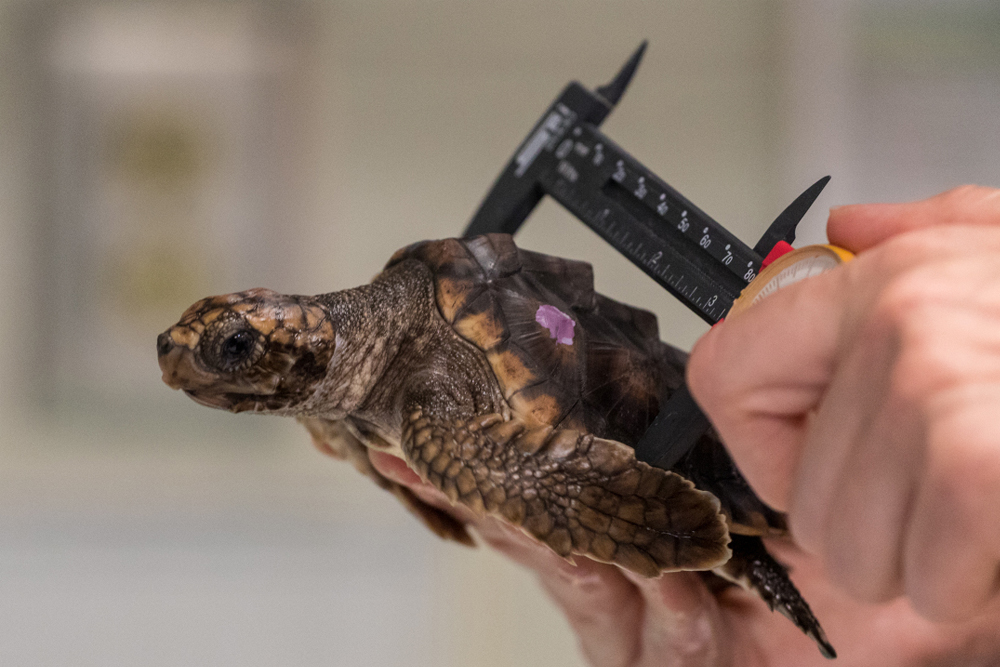
If Chamarea had to pick three words to describe loggerheads, they would be: feisty, strong, and beautiful.
But Chamarea’s love letter doesn’t end after graduation. With an acceptance letter to veterinary school, she hopes to continue to show her love for animals in a zoological, conservation, or marine setting!
As Chamarea prepares for veterinary school, the lab’s work with sea turtles continues.
Genevieve Bailey, who recently began her first semester as a DIR student with Dr. Wyneken, has already developed a special connection with a different sea turtle species.
Driven by a passion for environmental issues and an interest in marine biology, Genevieve understands the importance of studying sea turtles as global environmental shifts continue. She especially loves knowing that by caring for these turtles, she can help them grow before their challenging journey to adulthood takes place in the ocean.
While working with both green and loggerhead sea turtles, Genevieve has become especially fascinated by the unique characteristics of the greens, loving every moment of getting to know them. However, her love for green sea turtles began long before her time at the lab.
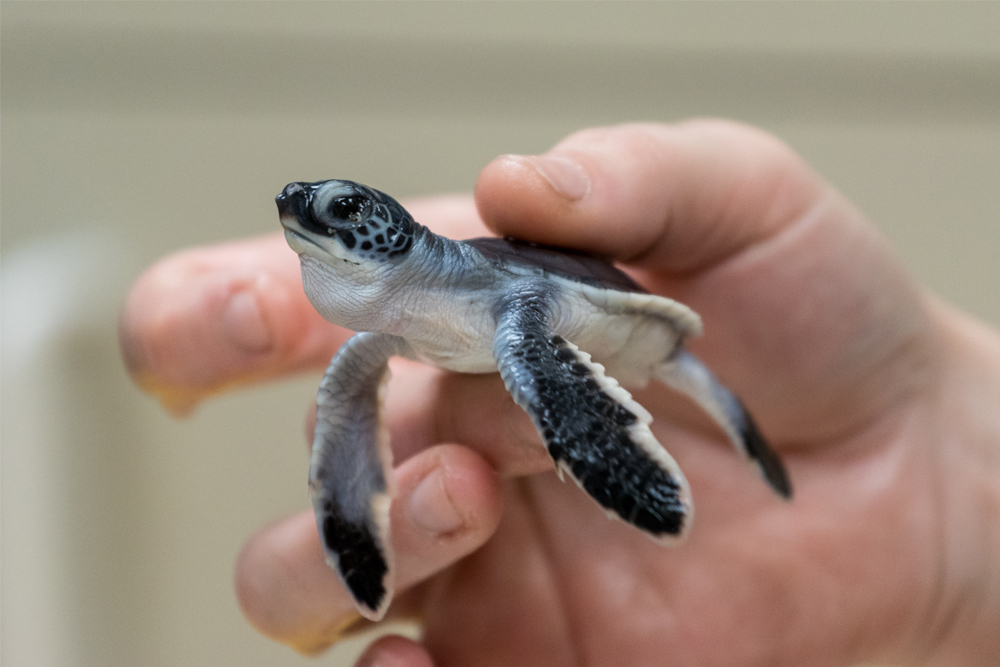
“When I was young, I was in a marine biology camp and we had to come up with an ocean animal with the first letter of our name,” said Genevieve. “So, I was Genevieve, the green sea turtle.”
If Genevieve had to pick three words to describe green sea turtles, they would be: escape-artist, playful, and wiggly!
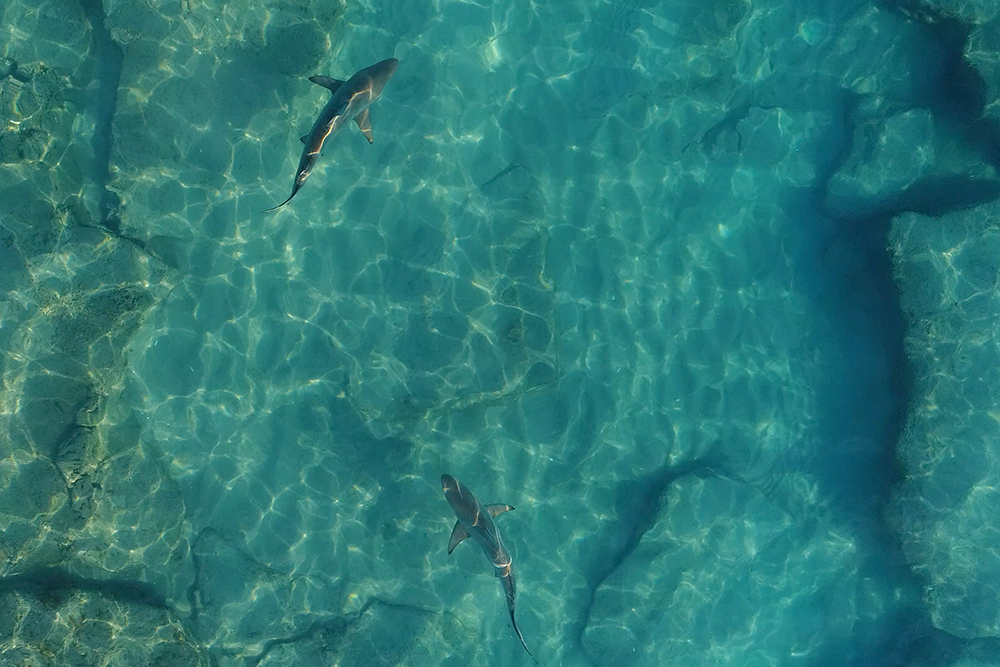
Dr. Stephen Kajiura is a principal investigator at the Florida Atlantic Marine Lab specializing in the functional morphology and sensory biology of sharks. In other words, Dr. Kajiura studies why these animals are shaped the way they are, the functional significance of those shapes, and how shape and the animals’ sense of the world around them promote their survival.
“You can look at how a hammerhead sees the world, its eyes way off on the ends of the head, and you can compare that to how a normal pointy nose shark sees the world with its normal pointy-head shape,” said Dr. Kajiura. “And then you can compare that to how a stingray sees the world with its flat body.”
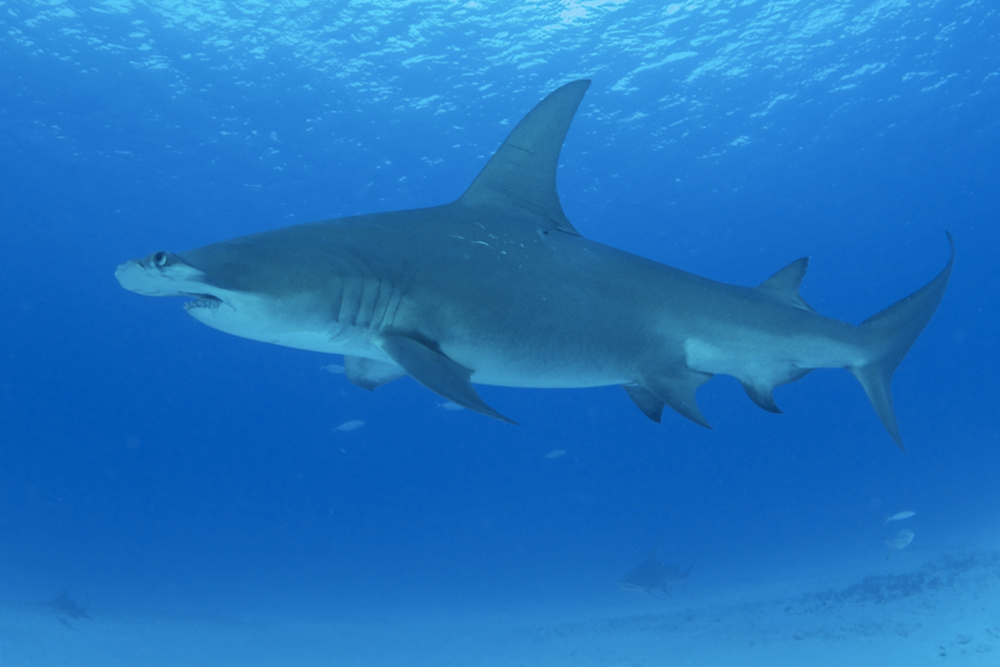
Dr. Kajuira’s fascination with sharks began in his early childhood, but nowadays his favorite thing about sharks is their unique electrosense. This additional sensory modality allows them to detect electric fields in the environment that many other fish can’t. Dr. Kajuira can explore how a shark’s head or body shape impacts how they detect these electrical currents.
Despite being a scientist, Dr. Kajuira still holds onto his childhood belief: “the cool thing about sharks is that they're just plain cool. Everybody likes them.”
What Dr. Kajiura enjoys about his research is being out on the water. Whether he’s on a boat catching sharks or diving alongside them, he cherishes the chance to experience these incredible animals in their natural habitat.
But what really drives his research is a relentless need to know.
“I want to know the answer,” he said. “And I need to find out before I die.”
If Dr. Kajuira had to pick three words to describe sharks, they would be: sleek, smooth, and sexy!
While Dr. Kajiura studies how sharks experience the world through shape and sensation, other researchers working in his lab are asking a different question: which sharks are out there, and how are their populations changing over time?
Olivia Schuitema is a PhD student with Dr. Kajuira studying shark species composition and relative abundance. Olivia says that tracking these patterns over time helps researchers understand how shark populations are changing and how they are being affected by human-related stressors.
To study sharks off the coast of southeast Florida, Olivia uses Baited Remote Underwater Video Systems (BRUVS) to observe sharks in their natural habitat, drumline fishing to safely catch, measure and then release them, and snorkel surveys to gather seasonal data throughout the year.
“Using multiple survey methods helps create a more complete and accurate picture of local shark communities, including data on species, size, sex, and abundance,” she said.
One thing Olivia loves about her research is the ability to connect with sharks and observe their individual behaviors and personalities. She says that every shark is a little different.
When it comes to the sharks themselves, Olivia admires the variations in their dermal denticle-covered skin — tooth-like armor that protects the shark and allows them to swim with speed. She loves how each species has its own beautiful colors, textures, and level of shine.
But her admiration for sharks fuels something even stronger: a sense of responsibility.
“I’m motivated by the knowledge that not everyone loves or understands sharks the way I do,"
said Olivia. “If I’m not willing to endure the long days and harsh conditions to study them, who will? Who will advocate for their conservation?”
If Olivia had to pick three words to describe sharks, they would be: charming, feisty, and misunderstood.
Despite the different methods used to study various marine species, our researchers and students are united by their love for the animals they study and the ocean we all share.
With that love, our lab wishes you a Happy Valentine’s Month and encourages you to stay passionate about the research that drives understanding and ocean conservation efforts.