Author: Sam Trail
Date: May 10, 2026
Spring is a time of transition. The shorter, colder days of winter begin to give way to the longer, warmer days of summer. Here in southeast Florida, the ground has no snow cover to melt and reveal newly green grass. Instead, seasonal changes are more nuanced. Florida residents recognize that temperatures shift from warm to hot, and the area becomes a little quieter – as true snowbirds fly back north, and “snowbird” retirees take I-95 in the same direction after escaping the frigid winter of their homes in the Northeast.
Although recognizing the signs of spring in Florida might be subtle to the untrained eye on land, in the ocean it is a different story. A peak below the waves reveals a variety of charismatic species that are hard to miss if you know what to look for in shallow, nearshore waters. Many of our researchers at the Florida Atlantic Marine Lab study these seasonal migrants.
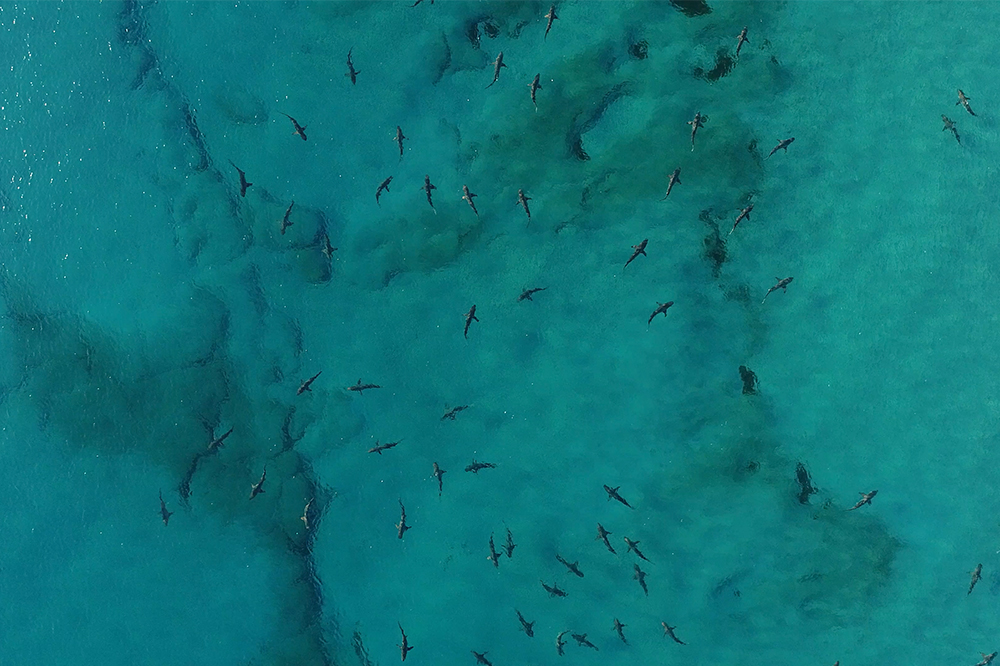
Along with snowbirds, thousands of male blacktip sharks spend their winter months in southeast Florida. However, when spring arrives, the sharks can head as far north as Long Island, New York chasing preferred water temperatures between 20 – 25°C (68 – 77°F). Dr. Stephen Kajiura, a principal investigator and professor with the FAU Marine Lab, has studied these seasonal migrations using aerial surveys for over 15 years, observing how the abundance of blacktips shifts from month to month, and year to year. As global temperatures increase, Kajiura is seeing fewer and fewer blacktips each winter within his survey area from Jupiter to Miami, Florida. With ideal winter temperatures now found at higher latitudes, the sharks do not need to swim as far south to find suitable conditions. The blacktips that ventured to our coasts this winter have all but left and won’t be back until they embark on their seasonal journey again next winter.
|
Migrating blacktip sharks from overhead. |
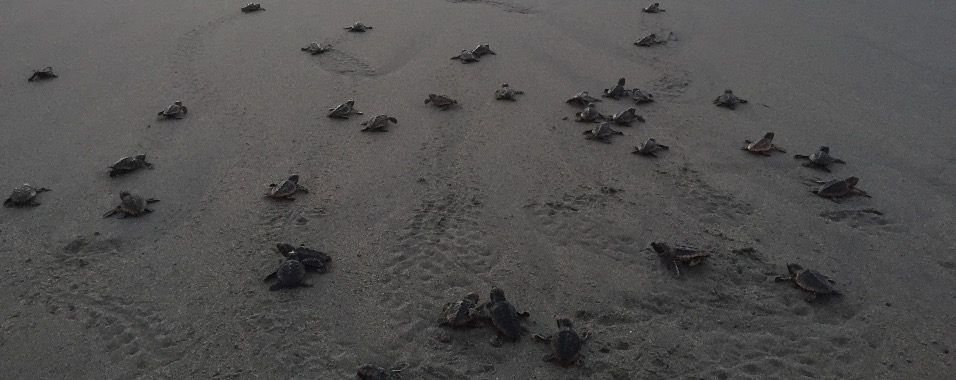
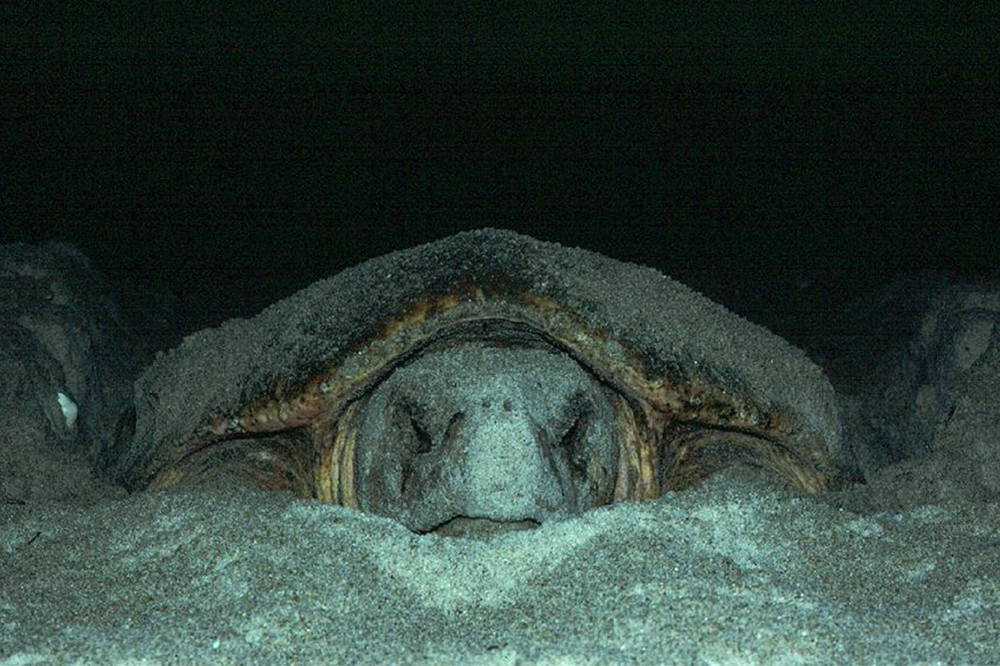
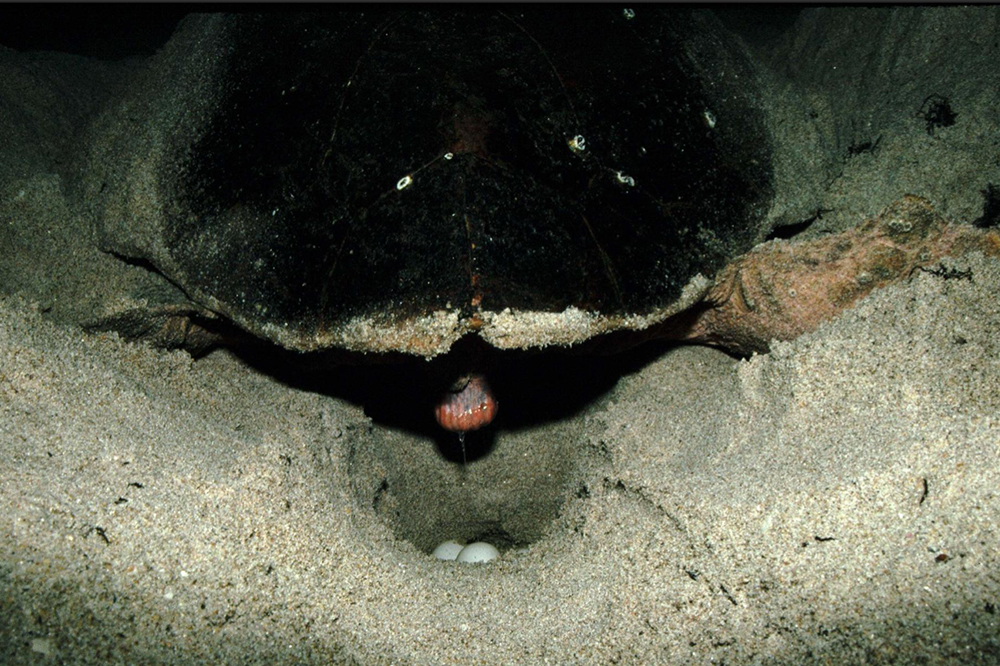
Although our winter blacktip numbers are dwindling, certain spring and summer migrants are on the rise: sea turtles. Some species (in particular, juvenile green sea turtles) can be found in our nearshore waters year-round, but large numbers of adult leatherback, loggerhead, and green sea turtles converge on our beaches during sea turtle nesting season which runs from about March 1st through October 31st. In these months, adult turtles often are mating just offshore, and mature, gravid females will crawl onto the beach at night to lay their eggs.
The state of Florida set an all-time record with over 133,000 unique nests in 2023, which coincided with record-high loggerhead and green sea turtle nests. Leatherback sea turtles just hit their all-time high in 2025 with over 2,000 nests recorded statewide (and are already off to a quick start this season as well), so recent years have been busy! Around 45-80 days after eggs are deposited (depending on the species and the nest conditions), dozens of tiny hatchlings will emerge en masse from their subsurface nest! Successful hatchlings will immediately sprint down the beach, swim out past predator-rich, nearshore waters, and into the open ocean. Dr. Jeanette Wyneken, Director of the FAU Marine Lab, and her team monitor specific nests for successful hatchouts, bringing a small subset of hatchlings into the lab for her long-term estimated sex ratio study each year. All collected turtles will be released back into the ocean a few months later, after we determine if they are male or female. As nesting season brings thousands of very large and very tiny sea turtles to our area, it is important to remember:
|
|
| A loggerhead female comes up onto the beach to lay a nest at night. | |
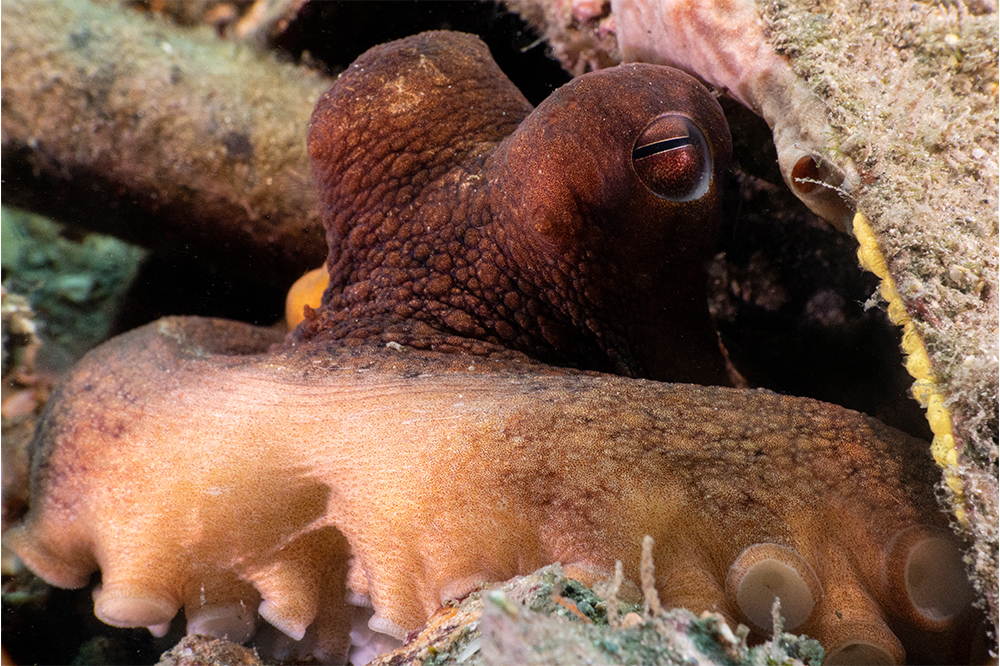
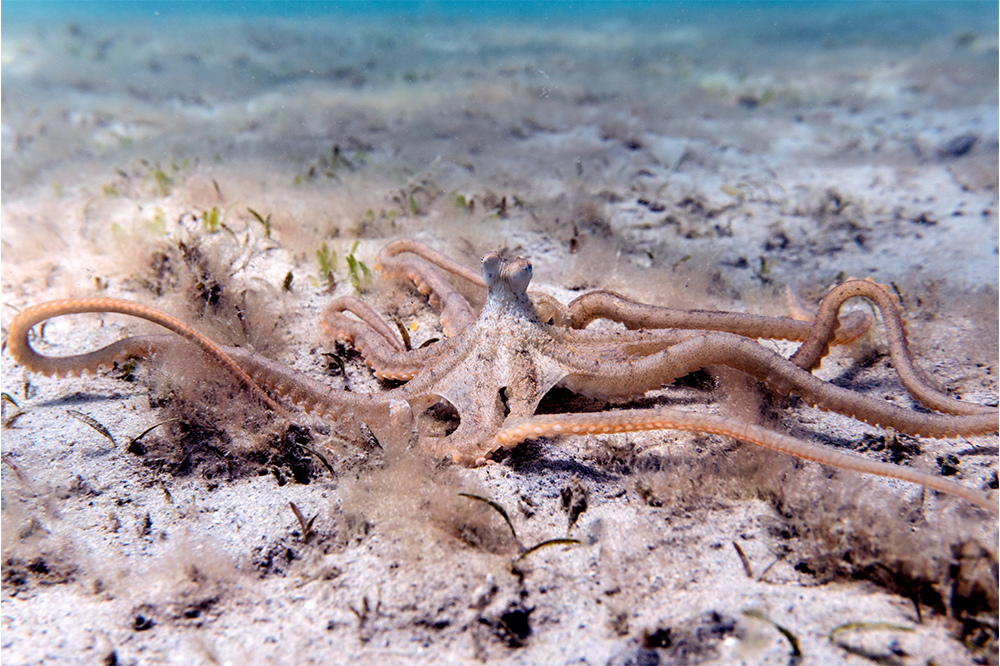
A far less obvious migrant to frequent southeast Florida’s nearshore habitats in the spring is the octopus! You are not likely to see these animals from shore like sharks and sea turtles, as the species we see in the area (such as the common octopus and the Atlantic longarm octopus) camouflage as rocks and seaweed or construct sand burrows in shallow water habitats. Although they can be found in our waters year-round, their abundance in our shallow lagoons peaks in the spring (April – May).
Dr. Chelsea Bennice, a Research Fellow and leader of the Glenn W. & Cornelia T. Bailey Marine SEA Scholars science outreach program, discovered that most of the octopuses that migrate to our lagoons in the spring are juveniles. These young octos likely come looking for warmer, shallow waters that are rich in food (clams, conch, crabs), which may increase their growth rate at a time when they are small and most vulnerable. Older, larger individuals likely move to deeper, cooler water to reduce the energetic cost associated with their higher metabolic rate. Although a majority of the octopus migrants are juveniles, mating events and females with eggs have also been observed here!
|
|
| A Common octopus (left) hides out in its den, and an Atlantic longarm octopus (right) is out and about on the sandy substrate. | |
So, while our shark researchers finally have some downtime from the field, April showers bring May hours (…and hours and hours…) of fieldwork for our sea turtle and octopus researchers. These seasonal seas keep our waters, and the FAU Marine Lab, splashing year-round!